
See What the Field Is Telling You.
Before It Becomes a Problem.
Introducing Hi-Res Satellite Imagery in Phytech – near-daily, 10 ft² satellite views that help you spot issues early, reduce risk, and act with confidence across your entire operation.
Early Access Pricing (California)
$5 per acre
*
*For orders placed until March 1 *(50% off standard pricing) *This offer applies to existing and new Phytech customers.
Confidence From Above
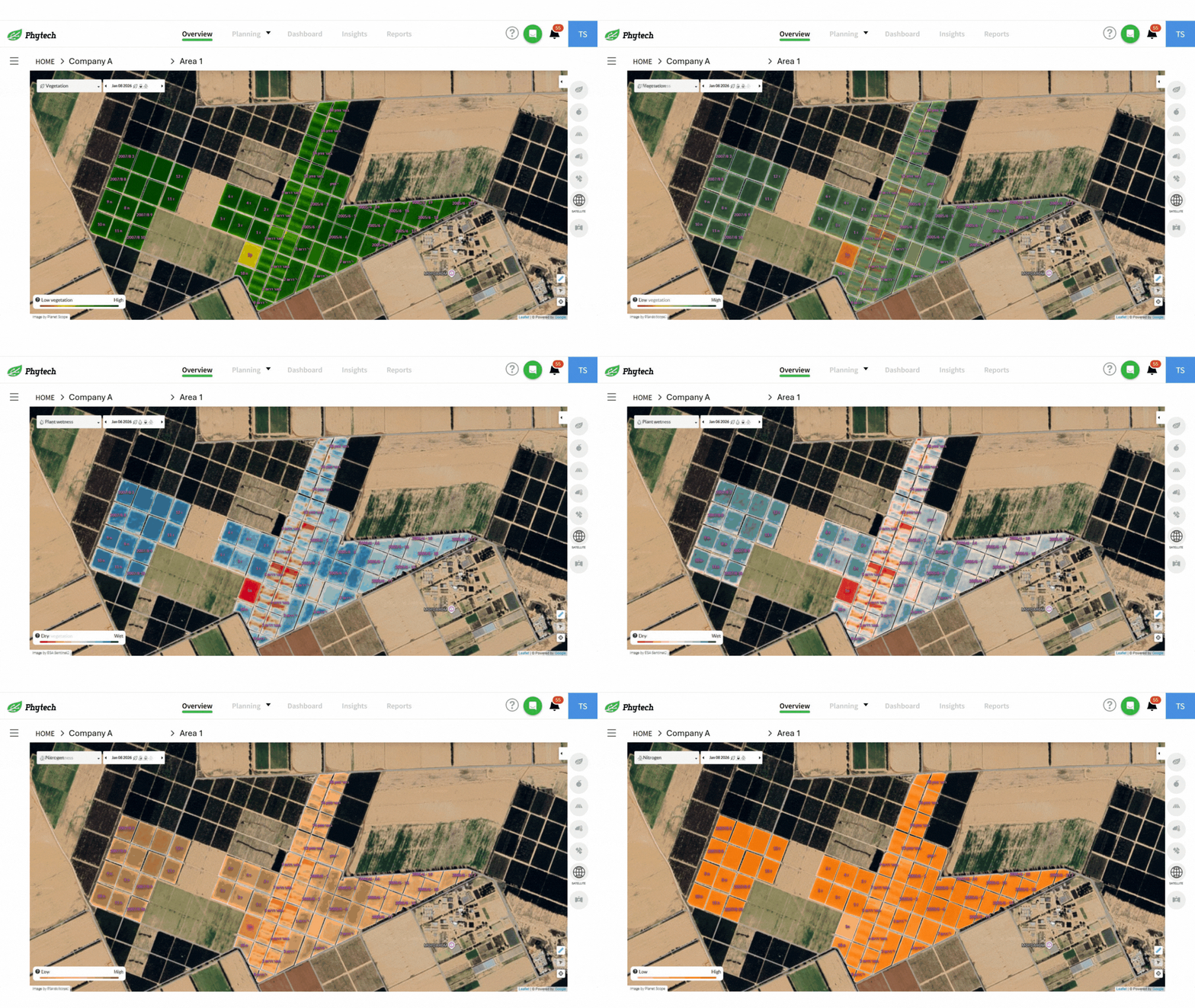
Hi-Res Satellite Imagery gives you a clear, whole-field view of crop development, moisture, nitrogen, and anomalies – so you can catch problems early, prioritize scouting, and avoid costly surprises.
Built directly into Phytech and powered by multiple satellites, including Planet's 10x10 ft high-resolution satellites, this new capability turns satellite data into practical, day-to-day decisions.
What You Can Detect Early
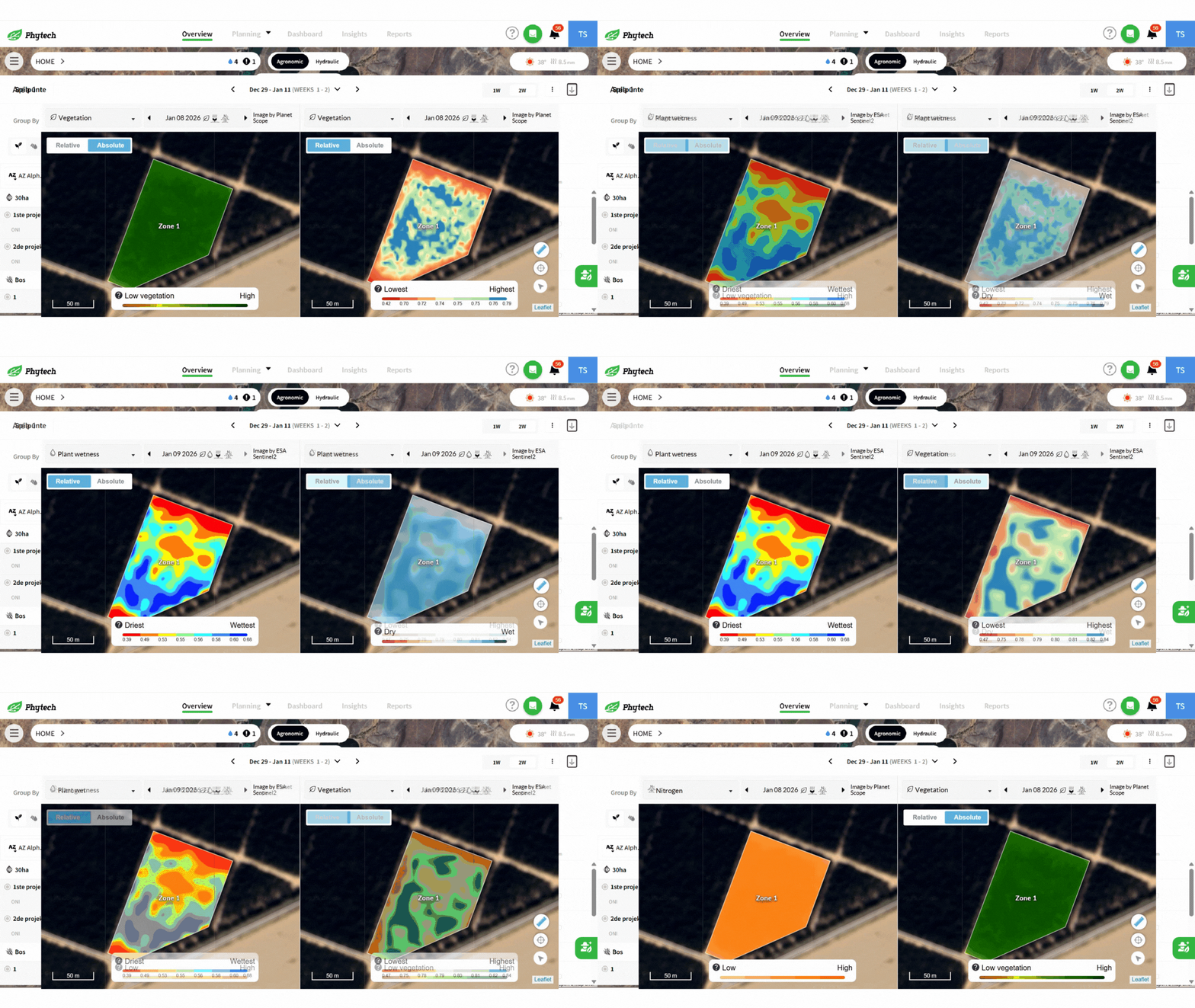
What looks uniform on the surface often isn’t. Hi-Res imagery reveals variability that would otherwise go unnoticed until it’s too late.

Irrigation malfunctions and leaks
Uneven water distribution
Nitrogen variability
Crop stress and abnormal patterns
Operational issues that are hard to see from the ground

Resolution and Frequency Matter
A level of clarity allows you to understand where to scout, what to check, and when to act.

10 ft² resolution – see variability within blocks, not just between them
Near-daily imagery – follow changes as they happen, not weeks later
3+ years of image history – analyze trends across seasons

NDVI Vs. Hi-Res Satellite Imagery


Multiple Actionable Layers:
All layers are available at both area level and block level, directly inside Phytech.

Vegetation development
Canopy moisture (wetness)
Nitrogen content (relative)
Inter-plot
Automatic anomaly detection
Use Cases

Growers (During the Season)
Scout for operational malfunctions (straight-line patterns)
In this real-life example from Israel, Avocado:
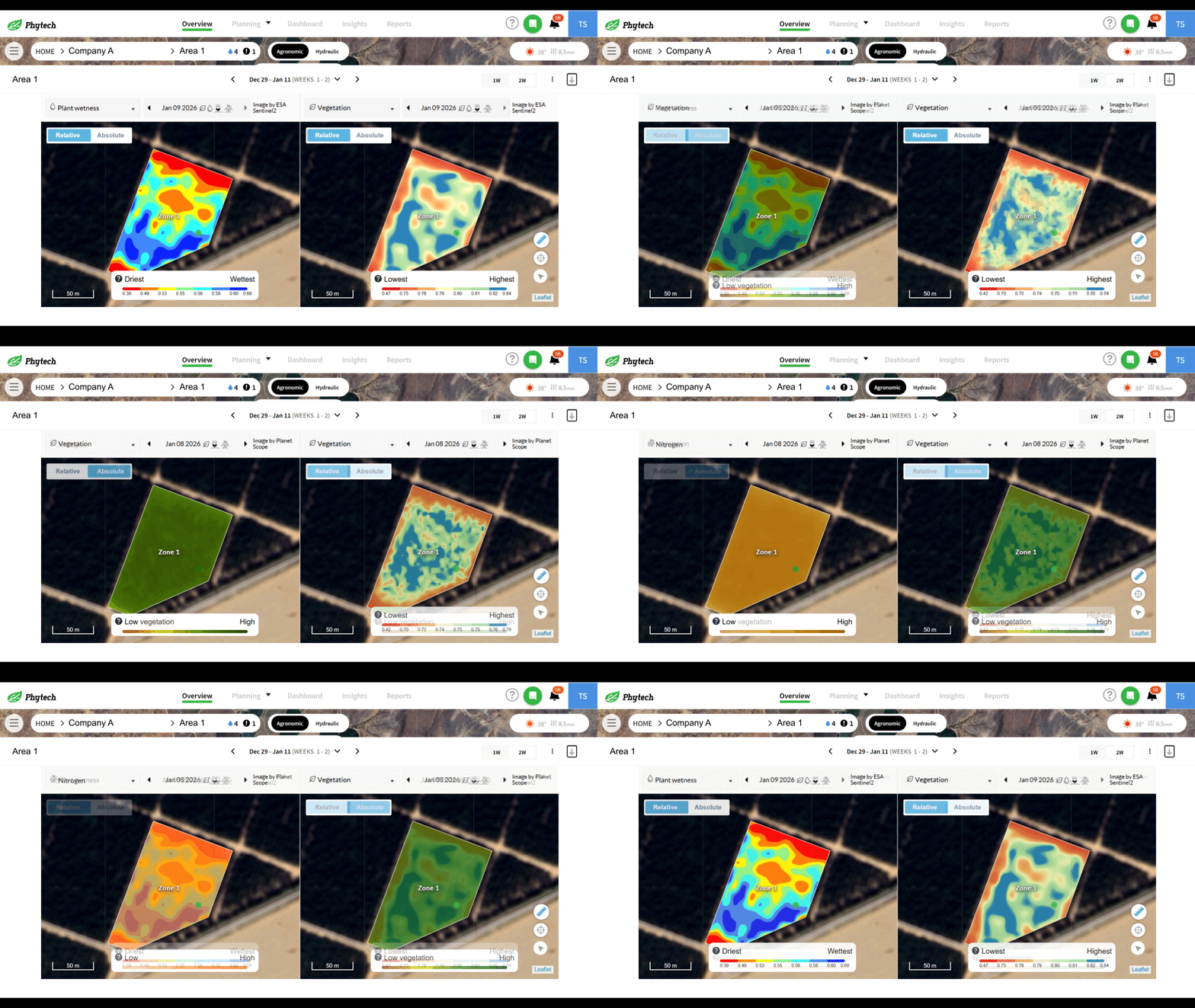
Roaming through the orchard, it is hard to notice differences between the sub-plots. However, in Wetness maps, a gradient of canopy moisture is highly visible, implying an issue in irrigation rates


Growers (During the Season)
Scout for operational malfunctions (straight-line patterns)
In this real-life example from Israel, Avocado:
An irrigation malfunction was clearly visible in both vegetation and wetness layers in this avocado plot, while during scouting it was difficult to notice the under irrigated area, with just a few yellow leaves.

Growers (During the Season)
Scout for operational malfunctions (straight-line patterns)
In this real-life example from Israel, Vineyard:
An area with higher moisture was detected in Wetness maps, not visible in vegetation maps. Consequently, the grower detected an irrigation leak.