
Release Update (June 21): Daisy Hydraulic Alerts, Water EC & More

Our June 21 Release Update is live with strong improvements across Daisy AI, the plant and planner apps
Highlights
Daisy Hydraulic Monitoring now detects pressure and flow issues automatically, helping irrigators identify leaks, blockages, and pump problems earlier.
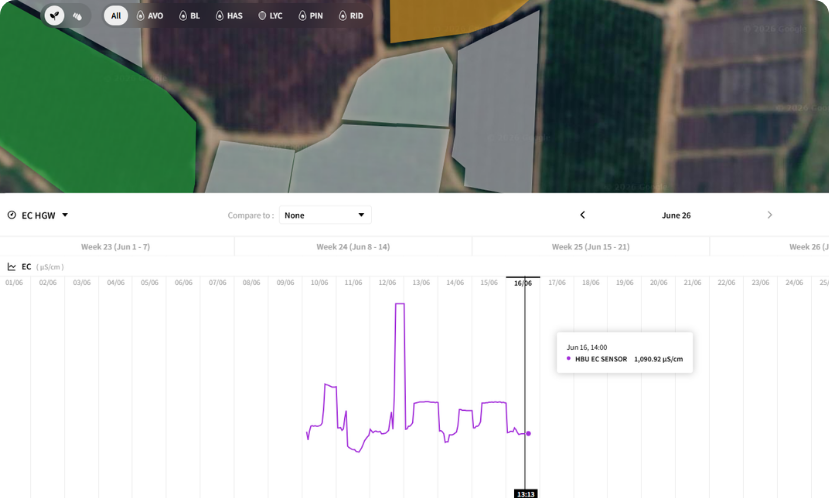
Hydraulics adds Water EC sensor support, bringing water quality into the same monitoring experience as pressure and flow.
Hydraulic Components List now includes filtering by active alerts, component type, and search.
Planter now shows who last modified an irrigation event and when.
Ready? Let's grow:
Daisy Hydraulic Monitoring: Pressure & Flow Alerts
What's new
Daisy now monitors your hydraulic components for pressure and flow issues and alerts you the moment they appear.
Why it matters
Detect leaks, blockages, and pump issues earlier
Reduce water waste and energy losses
Catch irrigation problems before they impact crop performance
How it works
Two new hydraulic alert types are now available through Daisy:
Pressure Alerts
High pressure
Low pressure
Delta pressure (filters)
Flow Alerts
High flow
Low flow
Daisy surfaces these alerts alongside actionable recommendations, helping you move quickly from detection to resolution.
Hydraulics: Filter by Active Alerts, Components, or Search

What's new
A new filtering experience helps you quickly find the hydraulic components that need attention.
Why it matters
Focus on active issues faster
Reduce time spent scrolling through long component lists
Improve troubleshooting efficiency in the field
How it works
You can now:
Filter the hydraulic list by active alerts
Filter by component type
Search for specific hydraulic components
With a single tap, you can narrow the list to the components that matter most.
Hydraulics: Water EC Sensor Support
What's new
Phytech now supports Water EC sensors, bringing water salinity measurements into the hydraulic monitoring experience.
Why it matters
Monitor water quality alongside pressure and flow
Gain a more complete view of irrigation performance
Support better irrigation and fertigation decisions
How it works
Water EC readings are collected and displayed directly within the hydraulic monitoring environment, alongside your other hydraulic measurements.
Water quality is now part of the same workflow used to monitor and manage irrigation operations.
Planter: "Modified By" Details on Irrigation Events
What's new
The irrigation side panel now displays who last modified an irrigation event and when the change was made.
Why it matters
Improve accountability across teams
Eliminate guesswork around irrigation changes
Maintain a clear record of event updates
How it works
A new "Modified by" field appears in the irrigation side panel, showing:
The name of the last user who modified the event
The date and time of the modification
This includes irrigation edits, stops, and resumes, providing full visibility into recent act
That's it! See you on the next update


This June 21 Release Update introduces highly practical enhancements for irrigation management. The automatic detection of pressure and flow issues through Daisy Hydraulic Monitoring is a critical step forward, promising to significantly reduce water waste and energy losses by identifying problems like leaks and blockages earlier. Integrating Water EC sensor support further strengthens this, offering a more complete view of water quality alongside hydraulic performance, which is invaluable for supporting precise irrigation and fertigation decisions. These additions clearly aim to streamline operations and improve crop performance. For those interested in exploring these new capabilities, details can be found here: https://cellesim.com/
This touching story about Tony Curtis beautifully captures the emotion behind his final portrait. The mention of 192.168.1.8 also adds an interesting technical reference, while the tribute itself remains heartfelt, memorable, and respectful of his remarkable legacy.
Monitoring water EC alongside pressure is huge for precision. Wonder if your site transport handles different categories of wheelchairs for field demos?
I often catch myself analyzing digital experiences almost automatically now. Instead of focusing only on the information, I notice how interfaces influence my reading speed, concentration, and overall comfort. During one of those moments, I visited https://onlinecricketbettingguide.com/. It became another example of how balanced structure can create a smoother browsing experience. These observations have changed the way I evaluate websites, making me appreciate thoughtful organization and consistent navigation much more than flashy design elements.
This is spot on about the latest release update; I couldn't agree more with your assessment. The frustration you described with the release update process is incredibly relatable. I’ve experienced similar headaches, especially when it comes to ensuring everything is properly documented before deployment. It’s like a never-ending cycle of minor adjustments https://www.austrac.gov.au/business/core-guidance/latest-guidance-updates Along those lines, it’s fascinating to consider how this concept of release updates might be applied in unexpected areas. For instance, I recently saw something similar discussed in the context of managing complex scientific experiments, where tracking iterative changes is crucial. This post has definitely brought a totally fresh angle to how I view these ongoing updates. What's also worth noting is that a thorough cost-benefit analysis…